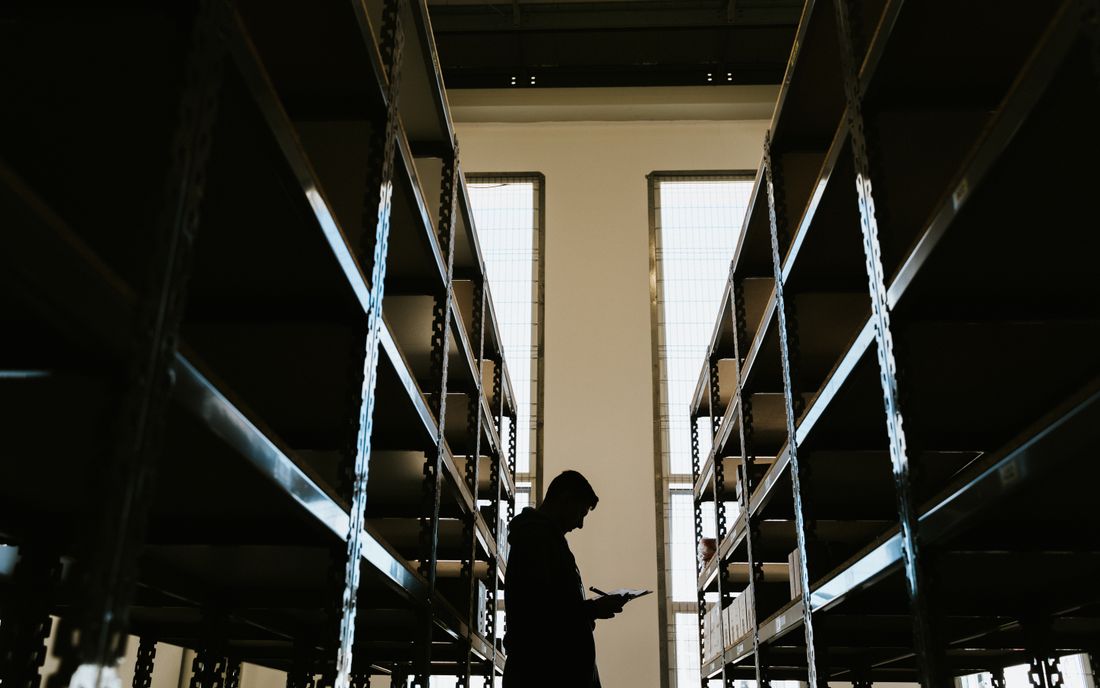
A mini-warehouse in the garage: seven steps
If you turn a garage or a yard room into a store, first clear the space, add shelves and number the goods.
Your online shop has grown, the stock no longer fits in the living room and has moved to the garage. The first week all is well: the boxes stand side by side and you remember where everything is. A month later you spend twenty minutes hunting for "the black bags", cosmetics melt in summer heat and cardboard swells with damp in winter. A garage or a room in the yard can be turned into a store, but it takes a few steps. Let us go through them in order.
First: is the stock suited to a garage
A garage gets hot in summer and cold and damp in winter. The first question is whether your goods can take that.
- usually fine: plastic items, crockery, stationery, small spare parts, toys (away from the sun);
- needs care or does not suit: cosmetics, medicines, food, electronics, paper goods, fabric and clothes (they absorb damp), batteries and accumulators.
Keep unsuitable goods in a dry, cool room in the house. Do not put petrol, paint, solvent or gas cylinders in the same place as your stock. Group suitable goods by type too: let goods of one type sit on one shelf unit, and both searching and counting get quicker.
Seven steps
The order of the steps matters: if you install shelving without clearing the space, you will have to move everything again.
- Clear and empty the space. Take out old things, sweep the floor, wipe off the dust.
- Install shelving. Do not put goods straight on the floor: 10 to 15 cm up, on a wooden pallet or a shelf. Heavy boxes at the bottom, light ones on top. Leave an aisle of 70 to 80 cm between the shelves.
- Protect against damp. Keep boxes 10 cm from the wall, and if the roof leaks, repair it.
- Set up lighting. You need a good lamp to work in the evening too.
- Stick on labels. Every box and shelf should carry a location code.
- Open a balance table. Each item in one row: code, name, location, quantity.
- Run a weekly count. On the set day and in the same order.
Heat, damp and safety
In Tashkent, in the summer heat, a closed garage can reach 40 to 45 degrees inside. For ventilation leave openings on two opposite sides, open the door in the morning, and put goods on the lower and middle shelves, not under the roof. Buy a cheap thermometer and glance at it on hot days.
In winter the main enemy is damp: cardboard boxes swell and labels peel off. Put valuable goods in plastic containers and add packets of moisture absorber (silica gel).
Against mice and rats, a shelf above the floor, closed containers and a trap are enough. This matters most if you have sweets or grains: they are found quickly.
Do not forget fire safety: leave at least a metre clear around the electrical panel, do not plug many devices into one extension lead and keep a fire extinguisher where it can be seen.
Location codes and the table
A location code is the most useful habit. Example: A-2-3 means "row A, shelf unit 2, third shelf from the bottom". Write that code beside each item in the table. When an order comes in you find the code in the table and take the item off the shelf in 30 seconds. Without a code the search takes three minutes. With 10 orders a day that is 30 minutes against 5.
Put fast sellers near the door on waist-height shelves, and heavy or slow-moving goods further back and lower.
The weekly count, access and the key
Set aside 30 to 40 minutes once a week. One shelf unit, one count: walk the codes and compare the number with the table. Record receipts and issues in the same table too: which shelf unit the delivered goods went to and which one the dispatched goods came from. Limit access: keep the key in two copies and note who holds it. If the store is open to the family, introduce a rule that whoever takes something writes it in the notebook.
Common mistakes
- carrying surplus stock into the house: nobody knows what is where;
- unlabelled boxes, "I will write on them later";
- putting boxes straight on the floor;
- keeping the door shut in the hot months;
- writing only the quantity in the table, with no location code;
- piling boxes in front of the shelves and blocking the aisle.
Conclusion
A mini-warehouse in a garage rests on three things: a clean, dry space, shelving with location codes and a weekly count. When the stock grows and the lines of boxes lengthen, outside help is useful: the Sanab team can count the goods and help put the labels and location codes in order.