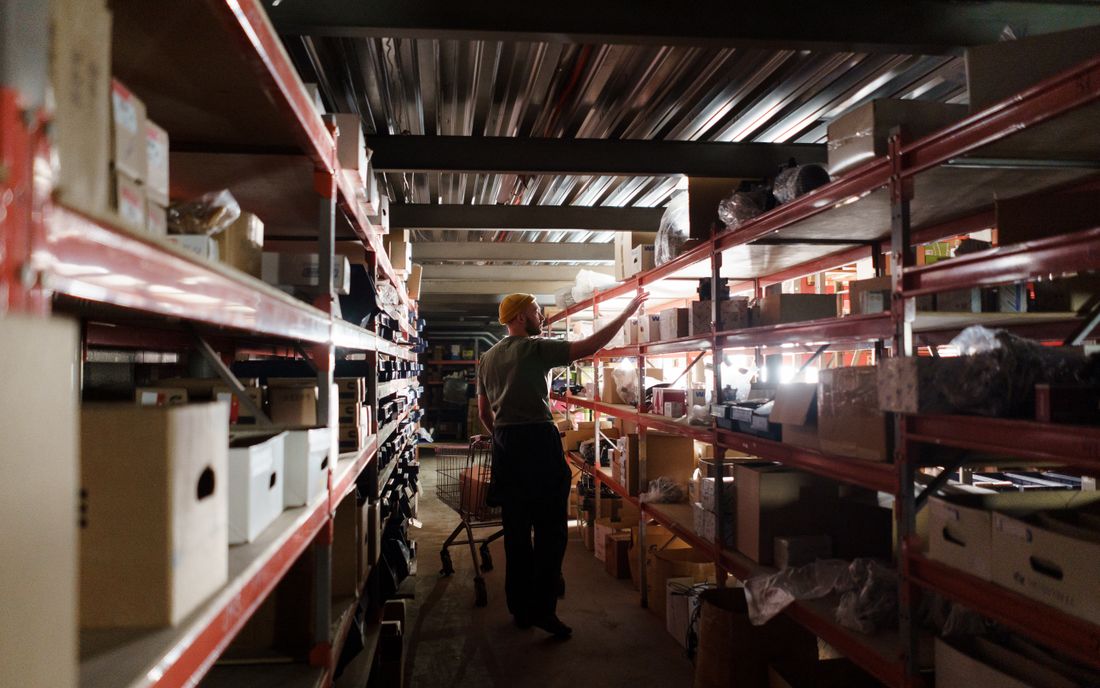
Order on the shelf: keep best sellers within reach
Heavy goods low, fast sellers at eye level, a label on every shelf: these rules make both selling and counting noticeably easier.
How long does it take to find the item a customer has just asked for? When you count, do you gather the same product from three different shelves? More often than not the trouble is not a lack of goods but untidy shelves. A well-kept shelf speeds up selling, makes counting easier and cuts the number of mistakes. You do not need costly equipment for this: a few simple rules are enough.
Split the shelf into three zones
Any shelf can be divided by height into three zones:
- eye and hand level: the best sellers and the most profitable goods;
- the top tier: light and slow-moving goods, such as empty packaging or seasonal items;
- the bottom tier: heavy and bulky things, such as water bottles, sacks and large boxes.
Do not put heavy goods up high: they can fall, break or hurt you. And if you hide a fast seller at the bottom, you will bend down every time and lose minutes. To learn what moves fastest, write down daily sales for a week and then rearrange the shelf according to those notes.
Take a household goods shop as an example. Cutlery sets and glasses are asked for often, so put them at eye level. Big pots and washing bowls are heavy and rarely wanted, so the bottom tier suits them. Tablecloths and gift wrap, which matter only before a holiday, can wait on top. When the season passes, they swap places.
One item, one place
The "one item, one place" rule is simple: let identical goods sit in one place wherever possible. If one product is spread over two shelves, it may be counted twice, or missed altogether, during a stock-take. If you cannot avoid it, say part is in the shop and the rest in the back room, mark both places with labels reading "shop" and "reserve". Your count sheet will then have two lines, which you add up afterwards.
It also helps to put similar goods side by side: tea next to tea, thread next to thread. Customers choose more easily, and you move through one group in a row when you count.
Labels and numbers
Give a number to every shelf and every tier. For example, A-1 is the first tier of the first shelf and A-2 is the second tier. Stick a label on the shelf edge with the name of the goods and, if relevant, the size or colour. Numbering speeds up counting a lot: on the sheet you write "A-1: tea, 12 packs" and the next day you can recheck exactly that spot.
How to keep it tidy
Order is not set up once and forgotten; it has to be maintained. Three small habits are enough:
- Spend five minutes every day before closing: put back anything that has wandered to the wrong place.
- When new stock arrives, slide the old stock forward and put the new behind it.
- Once a week check the labels and wipe off the dust; replace any label that has worn out.
Say you serve dozens of customers a day. If finding each item takes half a minute instead of two, work out for yourself how much time that saves by evening: it goes to another customer or to rest.
Common mistakes
- putting everything down "just for now" and never sorting it out;
- shelves with no labels: one person knows where things are while the rest hunt for them;
- overloaded tiers: the shelf sags and goods fall;
- mixing reserve stock with goods for sale;
- placing new stock on top of old without making room.
Conclusion
A tidy shelf is not for looks but for quick finding and a count you can trust. Zones, the "one item, one place" rule, numbers with labels and five minutes each day are enough to begin. When stock grows and you have no time to count it yourself, the Sanab team can number your shelves, run the count and hand over the result in a clear report.