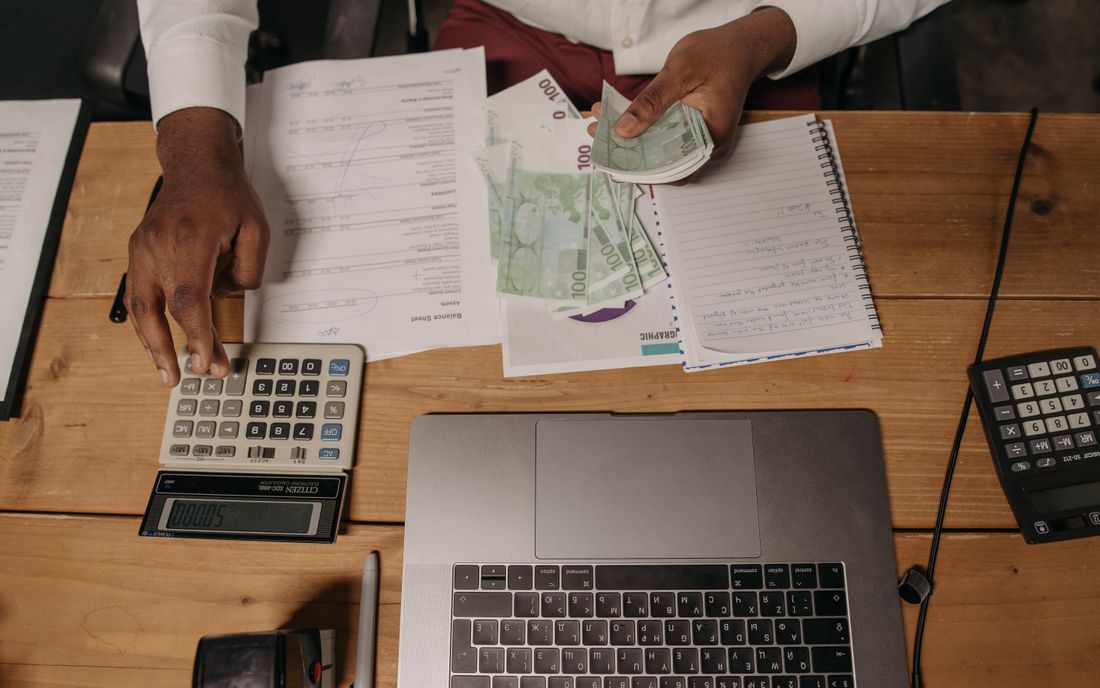
After the holiday: count what is left and leave a note for next year
When holiday sales end, count what remains and write down what sold out first, so that next year's buying is easier.
The holiday sales are over: Navruz, Hayit or New Year has passed, you are tired and the shelves are bare or untidy. Many people think "now I will rest", skip the count and toss the packaging and leftovers into a corner. This is exactly when the most valuable information slips away: what sold out first, what is left, which price worked. An hour's count in the first days after the holiday makes next year's buying much easier.
When and what to count
The best time is when selling has slowed but memory is still fresh, that is, two or three days after the holiday. You need not count everything. Count only what you bought and prepared for the occasion:
- holiday goods: sweets, gifts, decorations, seasonal clothing;
- assembled gift sets;
- packaging materials: boxes, ribbon, paper, cards.
To count quickly and accurately, take one group and then the next, and write each result on a sheet straight away. With two people, one counts and the other writes, and the job takes about an hour.
Work out how much sold
During the holiday you may not have managed to record every sale, so work out sales from the balance. The rule is simple: sold = balance before the holiday + received during it − balance now.
Example: there were 50 before the holiday, you brought 30 more in the middle, and 12 are on the shelf now. The sum: 50 + 30 − 12 = 68 sold. Now add up the sales entries in the book. If they give 64, there is a gap of 4: perhaps given away, broken or unrecorded. Write the gap on a separate line; tomorrow you will have forgotten it.
Work out the takings too. At an average selling price of 40,000 so'm, 68 pieces bring in 2,720,000 so'm. With a purchase price of 25,000 so'm, the profit on the goods themselves is 68 × 15,000 = 1,020,000 so'm. Transport, packaging and discounts come off that, of course, but you now have the general picture.
What to do with what is left
Sort the leftovers into three groups:
- To keep until next year: goods that do not expire or lose value. Store them in a dry, clean place and write the date, quantity and "holiday, stored" on the box.
- To sell quickly: goods with a shelf life, or ones that lose value after the holiday. Sell these now at a discount.
- Useful for something else: ribbon, boxes and paper will serve ordinary gifts too.
Work out how much money is tied up as well: multiply the leftover quantity by the purchase price. For example, 12 pieces × 25,000 so'm = 300,000 so'm. Seeing that figure makes it easier to decide how much to buy next year. Put the leftovers in a definite place and keep them as a separate line in your main records, so that "left from the holiday" is not lost among boxes a year on.
A reminder sheet for next year
The most useful job is to write one sheet. Keep each point to a line or two:
- what sold out first and on which day;
- what moved slowest;
- when holiday selling started and on which day it peaked;
- which price worked and which discount helped;
- where the supplier was late;
- what to buy more of and less of next year.
A sample: "Sweets ran out three days before the holiday; I should have bought 20 more. Decorations hardly sold: buy half as many next year. Ran short of thread and ribbon." A short note like that beats a long report.
Stick the sheet on the box where the holiday goods are kept, or leave it on a "Holiday" page in the book. Next year it will then catch your eye by itself.
Common mistakes
- putting the count off for a month after the holiday, "to rest";
- throwing away packaging and ribbon without counting;
- not working out what sold and settling for "it went well";
- mixing leftover goods with the rest;
- not writing down conclusions and trusting memory.
Conclusion
A count after the holiday serves both for an exact balance and for next year's buying. Counting within two or three days, the sold formula, sorting leftovers into three groups and writing a reminder sheet take very little time and give great benefit. If a lot of stock is left after the holiday, the Sanab team can count it quickly and hand over the result in a report.